

Begin to Understand the Patterns Beneath Your Reactions.
As you become more aware of what you feel, you can begin exploring why certain situations affect you so deeply—and how familiar patterns may be shaping your everyday life.
Does This Feel Familiar?
When certain emotions or experiences seem to repeat, curiosity can help you begin understanding what is happening beneath the surface.
Awareness Creates Space for a Different Response.
We often develop ways of thinking, relating, and responding that once helped us navigate difficult experiences. Over time, some of those familiar responses may no longer serve us in the same way.
The AWARE phase is an invitation to explore these patterns without judgment. Rather than asking what is wrong with you, begin asking what you learned—and what you might need now.
Begin Looking Beneath the Surface.
- Recognize emotional triggers and recurring reactions
- Explore protective habits and learned responses
- Notice beliefs that influence your relationships and choices
- Understand the connection between needs, emotions, and boundaries
- Practice meeting yourself with curiosity instead of criticism
Understand.
Choose.
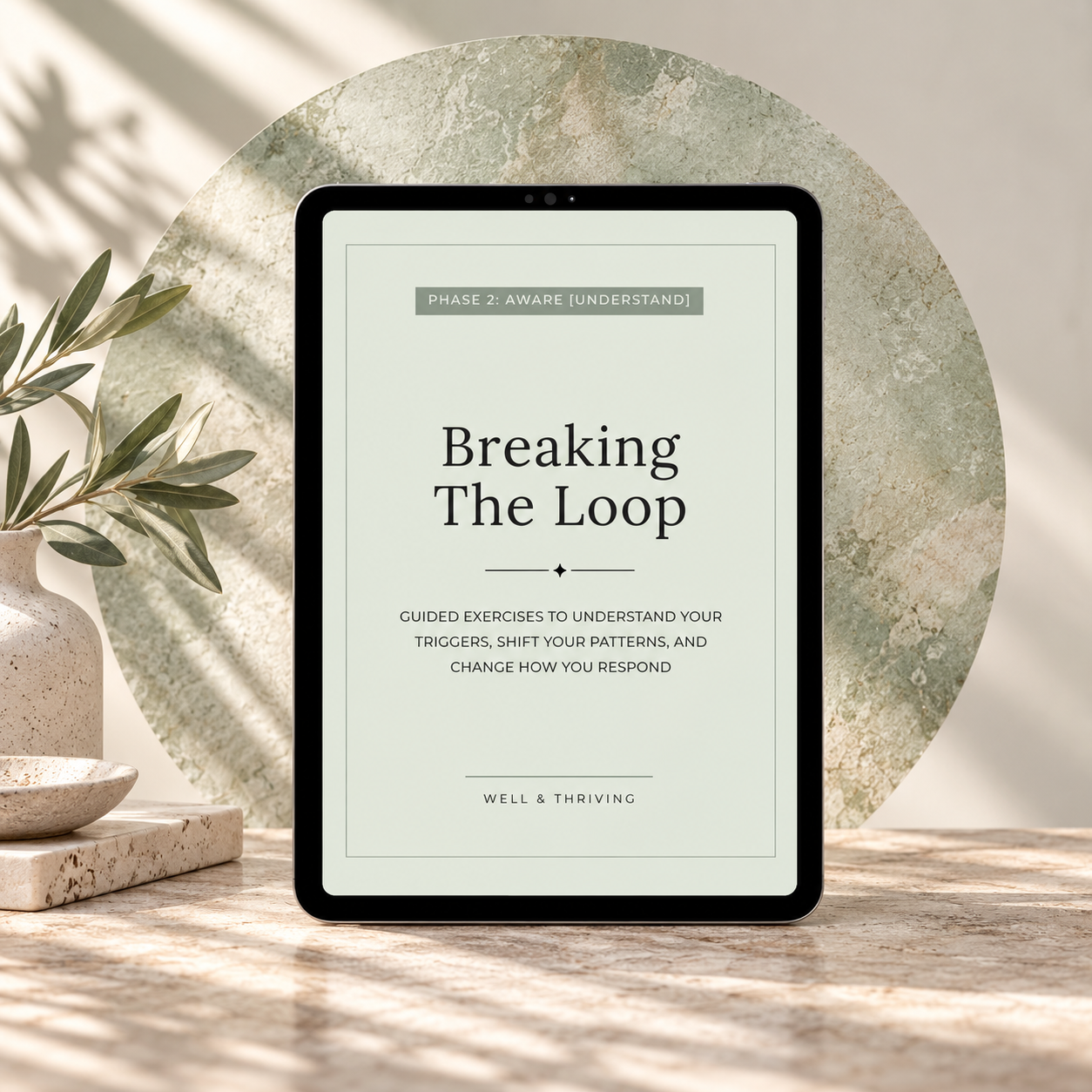
Breaking the Loop Workbook
A self-paced workbook designed to help you explore emotional triggers, recurring patterns, protective responses, and the beliefs that may be influencing how you relate to yourself and others.
- Recognize triggers and recurring emotional cycles
- Explore protective parts and earlier learning
- Identify limiting beliefs and identity patterns
- Reflect on boundaries and unmet needs
- Practice responding with greater self-awareness
From Recognizing Patterns to Understanding Them.
These guided reflections help you connect what you experience in the present with the habits, beliefs, and responses you may have developed over time.
Emotional Triggers
Identify situations that activate familiar feelings and reactions.
Recurring Patterns
Look at repeated cycles in relationships and everyday life.
Protective Responses
Explore the ways you learned to cope, adapt, or stay safe.
Inner Narratives
Notice the beliefs and stories shaping your choices.
Needs & Boundaries
Connect recurring responses with unmet needs and personal limits.
New Choices
Practice responding with greater awareness and intention.
Make Room Between the Trigger and Your Response.
You do not have to change every pattern at once. Use these seven reflection steps as a flexible way to explore one recurring experience with more clarity.
Pause
Notice when a familiar response begins to surface.
Name
Identify the emotion, trigger, or situation.
Explore
Ask what the response may be trying to protect.
Connect
Consider the belief or earlier learning beneath it.
Reframe
Explore another interpretation or possibility.
Choose
Identify one small response that reflects your needs.
Reflect
Notice what changed and what still needs support.
Phase 3 — RELEASE | Let Go
As you recognize the patterns you have been carrying, you may feel ready to explore ways to process emotions, loosen what no longer serves you, and create space for something different.
Explore Phase 3 →