
Make Space for What You’re Ready to Release.
Understanding your patterns is an important step. Now you can begin exploring the emotions, expectations, and experiences you have been carrying—and what it might mean to loosen their hold.
Does This Feel Familiar?
Sometimes we can understand why something hurts and still feel the weight of it. Release begins with noticing what is present—not pushing yourself to be over it.
Letting Go Doesn’t Mean Forgetting What Happened.
Release is not about pretending an experience did not matter, rushing forgiveness, or forcing yourself to feel differently. It is about making room to acknowledge emotions and explore ways of responding to them with care.
The RELEASE phase invites you to move at a pace that feels manageable, returning to grounding whenever you need it.
Make Room for a Different Relationship With What You Carry.
- Recognize emotions you have been avoiding or holding in
- Explore safe ways to express what you feel
- Notice where tension may show up in the body
- Reflect on expectations, guilt, and unresolved experiences
- Practice returning to steadiness after emotional work
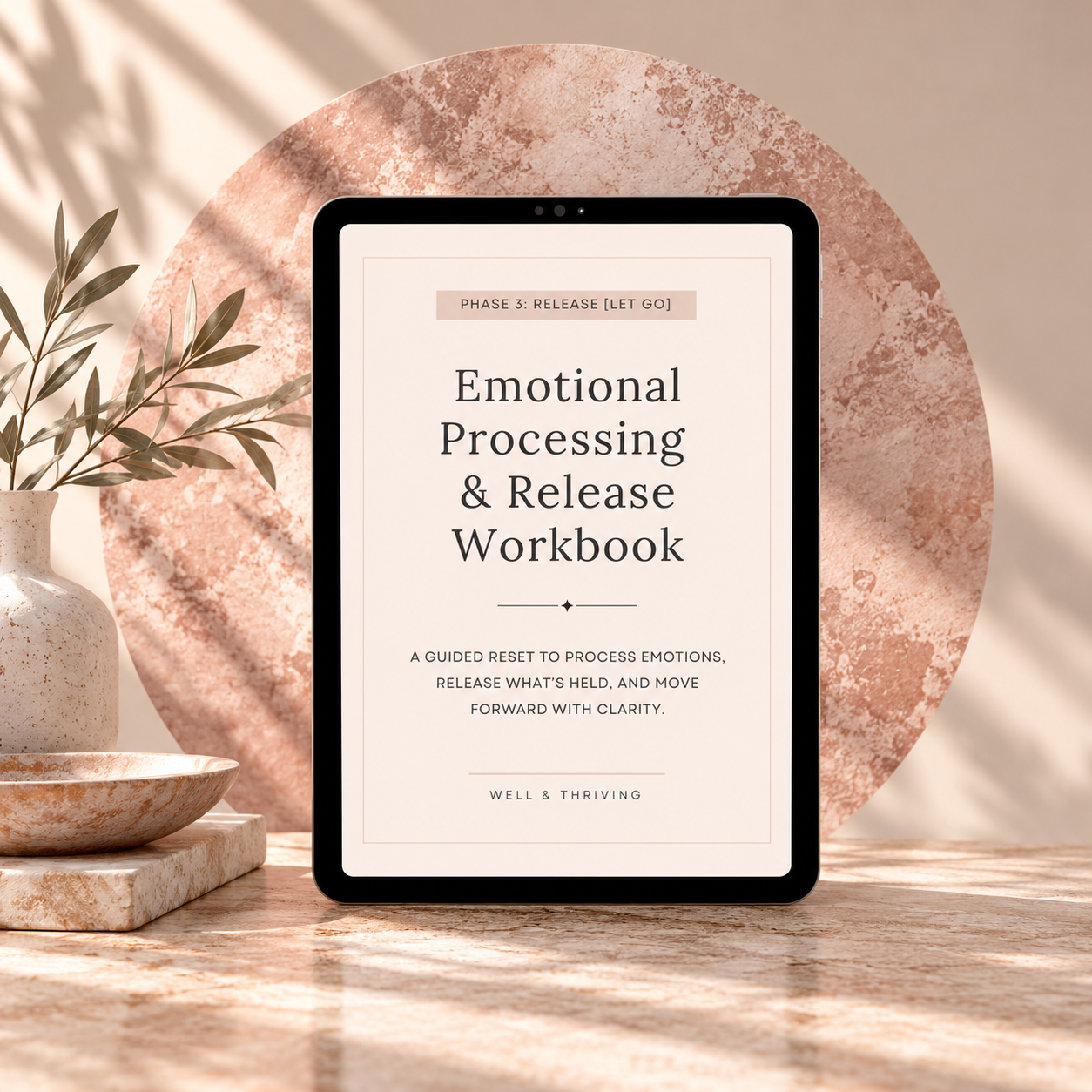
Emotional Processing & Releasing Workbook
A self-paced workbook that guides you through preparing for emotional work, exploring expression and release, and returning to steadiness through reflection and reset practices.
- Prepare with grounding and emotional check-ins
- Explore free writing and emotional expression
- Practice gentle breath, movement, or voice exercises
- Reflect on forgiveness, boundaries, and closure
- Develop a personal reset practice
Prepare. Release. Reset.
The workbook offers a guided process for approaching emotional release with reflection, practical exercises, and space to return to grounding whenever needed.
Prepare
Build awareness, steadiness, and a supportive starting point.
Emotional Expression
Give feelings space through writing and reflection.
Body-Based Release
Explore gentle breath, movement, and voice practices.
What You’re Holding
Notice the stories, expectations, or emotions you may be carrying.
Forgiveness & Closure
Consider what closure might mean without forcing forgiveness.
Reset & Integration
Create a sustainable practice for returning to yourself.
Practice Letting Go at Your Own Pace.
These seven gentle prompts illustrate how you can combine emotional expression with grounding and integration. You can pause, adapt, or skip any exercise that feels too intense.
Check In
Notice your emotional state and what feels manageable.
Make Space
Allow thoughts and feelings to be acknowledged.
Express
Use writing or another safe form of expression.
Move
Explore gentle movement or breath at your own pace.
Reflect
Consider what you want to loosen your grip on.
Reset
Return to grounding and supportive care.
Integrate
Notice what you learned and what you need next.
Emotional release is not a test of endurance. If an exercise feels overwhelming, stop and return to what helps you feel supported.
Phase 4 — THRIVING | Become
As you make room for change, you may feel ready to explore the values, choices, and daily practices that support the person you are becoming.
Explore Phase 4 →